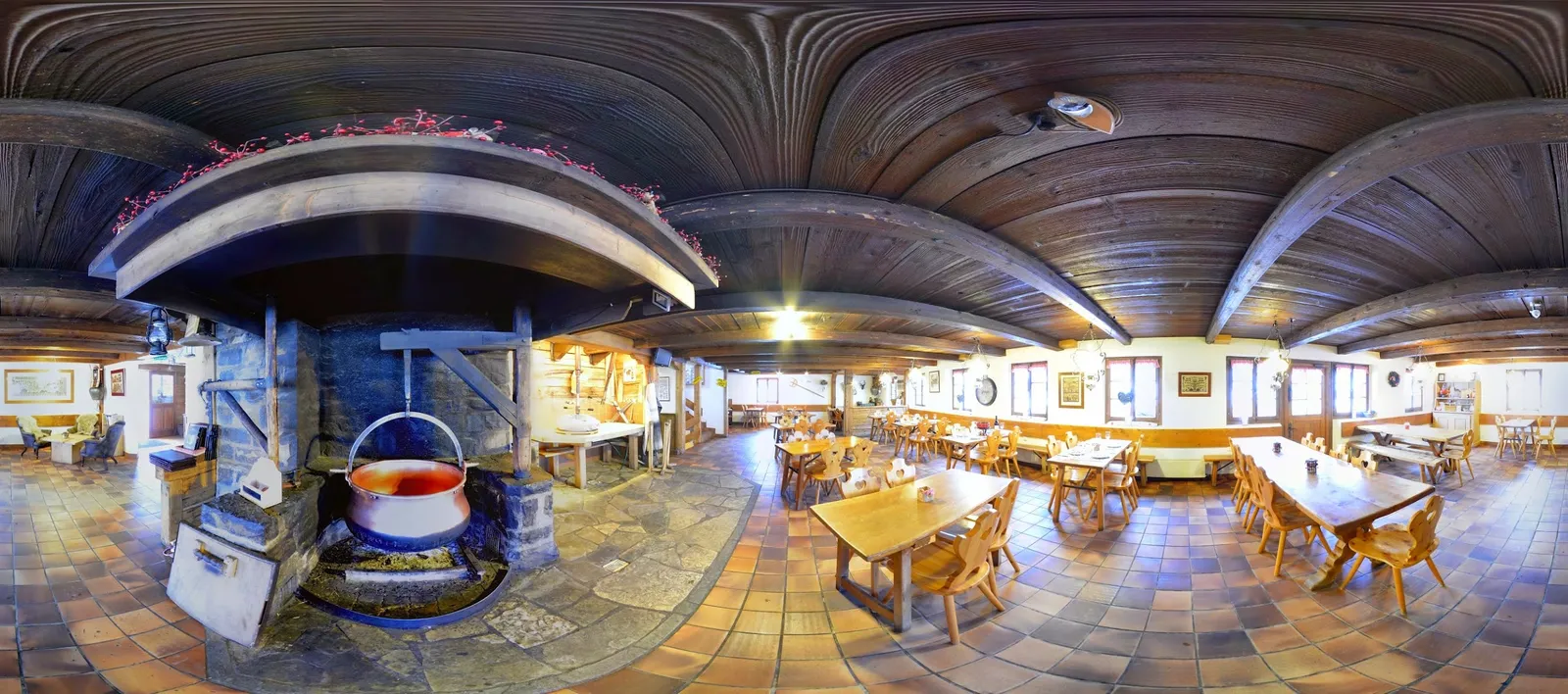
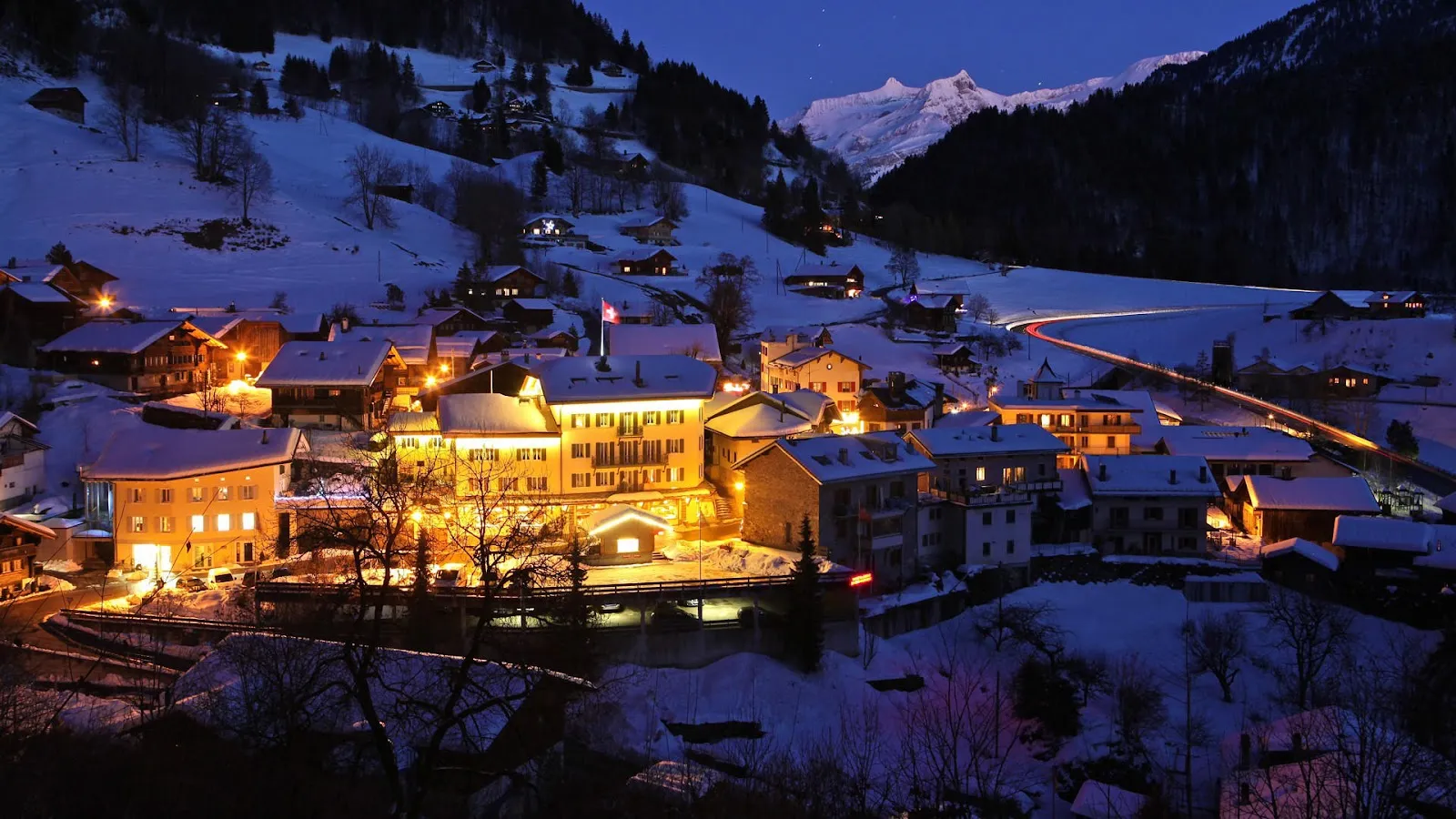
There is fondue and there is Saanenland fondue. A few kilometres either side of the Gstaad valley floor, the Alpine cheese trade has been lived in, not marketed, for six centuries — the Pays-d’Enhaut village of Rougemont is still a working Gruyère AOP terroir, and every berghaus between Lauenen and Schönried quietly turns out the real thing. Restaurants in Gstaad itself range from the woodpanelled Stübli of the 1845 Posthotel Rössli to a gleaming truffle-fondue table at the Promenade’s grand hotels. This guide is for visitors who want the genuine article, in the right pot, at the right price, in the right village.
What makes Saanenland fondue different from the rest of Switzerland
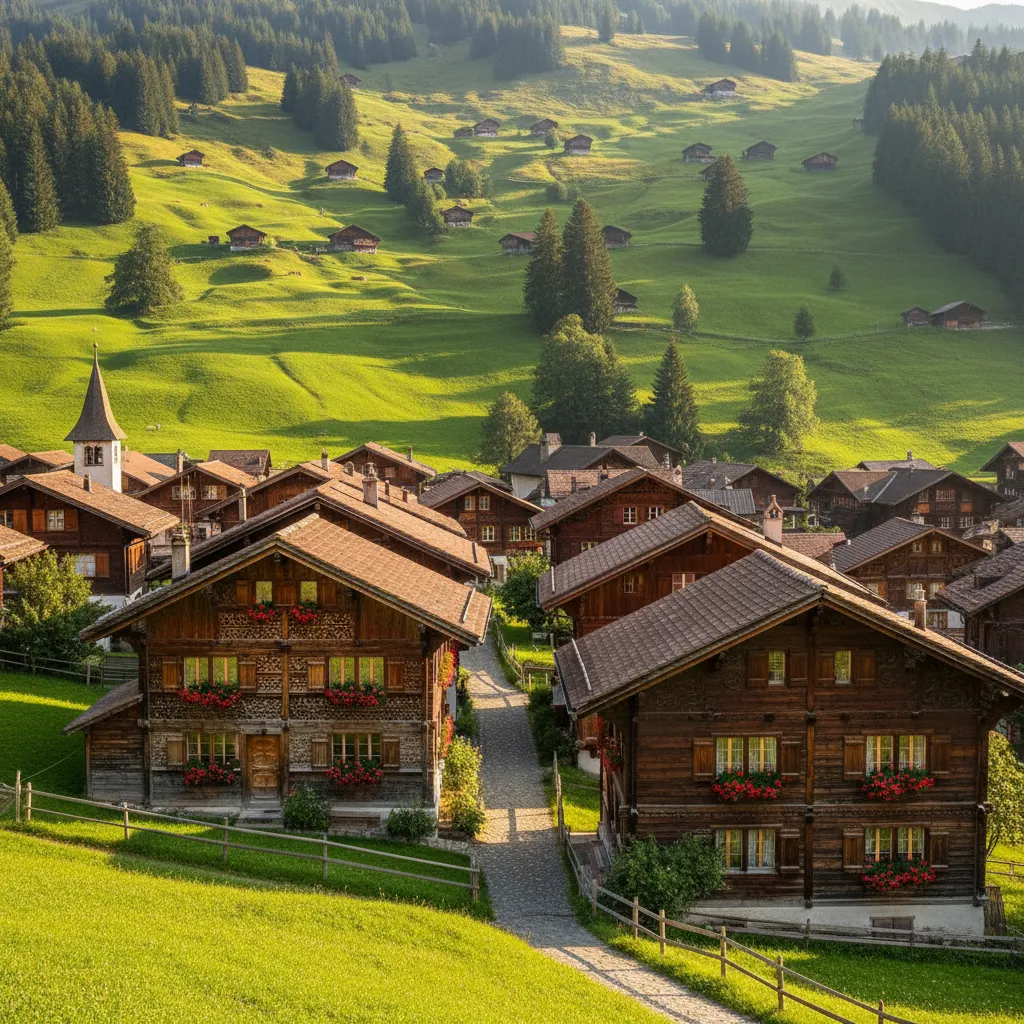
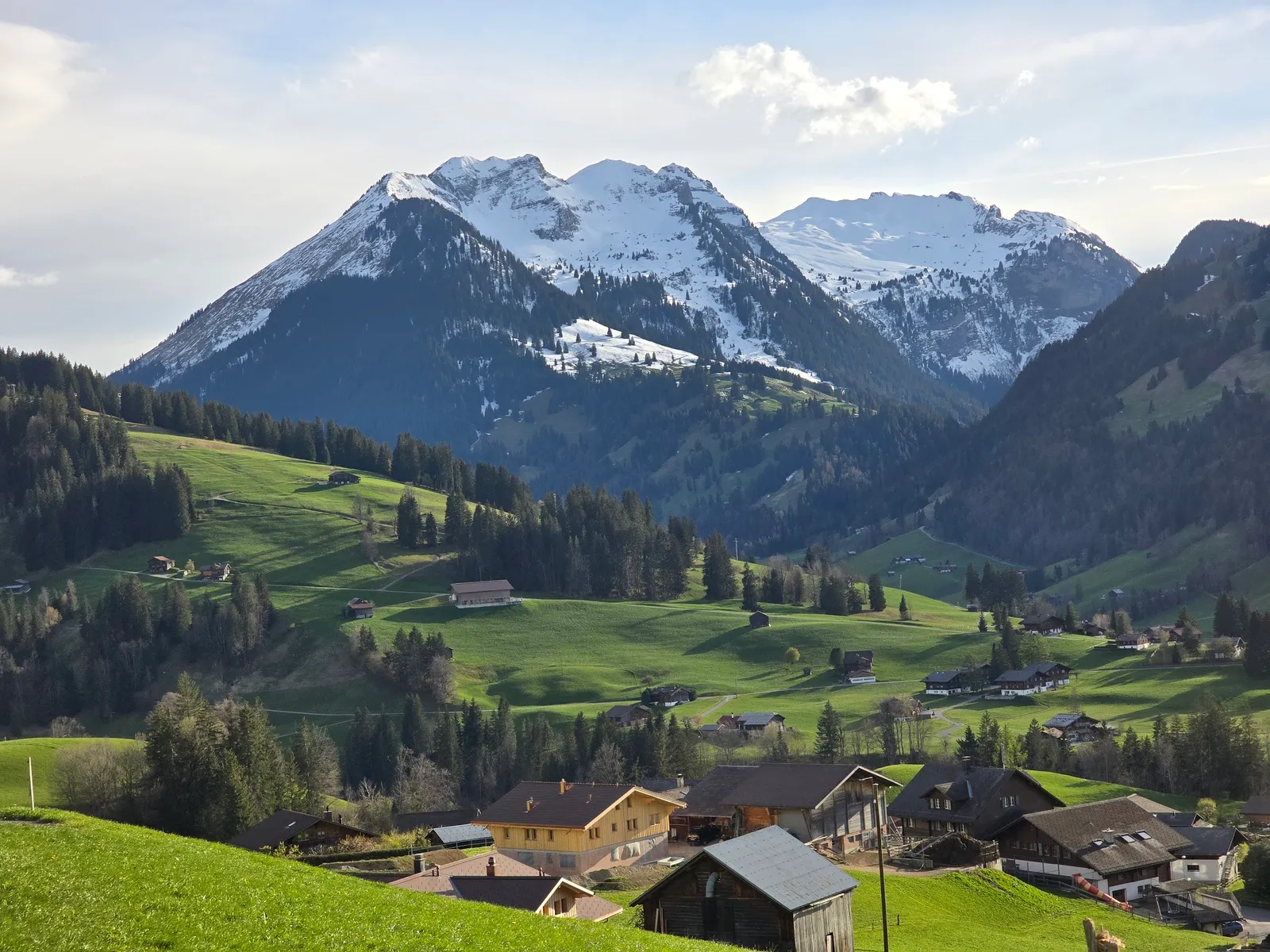
Geographically the Gstaad valley sits on a seam. To the east (Bernese Oberland) you are in Emmentaler and Berner Alpkäse country. To the south-west (Canton Vaud, the Pays-d’Enhaut) you are in Gruyère AOP country. Rougemont — a ten-minute MOB train ride from Gstaad — is one of the southernmost Gruyère villages, and Saanen itself lies in one of the few German-speaking Bernese municipalities that co-owns an AOP boundary with the Vaudois.
What that means on a fondue plate: the Saanenland moitié-moitié is usually half Gruyère du Pays-d’Enhaut and half Vacherin Fribourgeois, which gives a silkier, less salty pot than you will find in Zürich or Zermatt. Some chalets in Lauenen and Gsteig still use a local Berner Alpkäse instead of Vacherin, which is nuttier and less elastic. Neither is “better” — locals argue about it the way Italians argue about carbonara.
The second difference is bread. Most serious Saanenland addresses serve pain de campagne baked the same morning, often from Saanen’s last surviving wood-fired village bakery or from earlybeck on the Gstaad Promenade. Cubes are cut with a crust on every side so nothing sinks. If a restaurant hands you pre-cubed supermarket bread in a plastic basket, walk out.
The Rougemont axis: where the cheese is actually made
If you take the MOB (Montreux-Oberland Bernois) train south from Gstaad for roughly ten minutes you cross into Canton Vaud and arrive in Rougemont. This is fondue origin territory. Two addresses matter.
The first is Le Cerf Rougemont — a cozy authentic chalet on Rue des Allamans that locals consistently call the best fondue in the Alps. Moitié-moitié is the house standard, and they pour a proper raclette du Pays-d’Enhaut in winter. It is Michelin listed, which in this context means recognised for honesty rather than ambition.
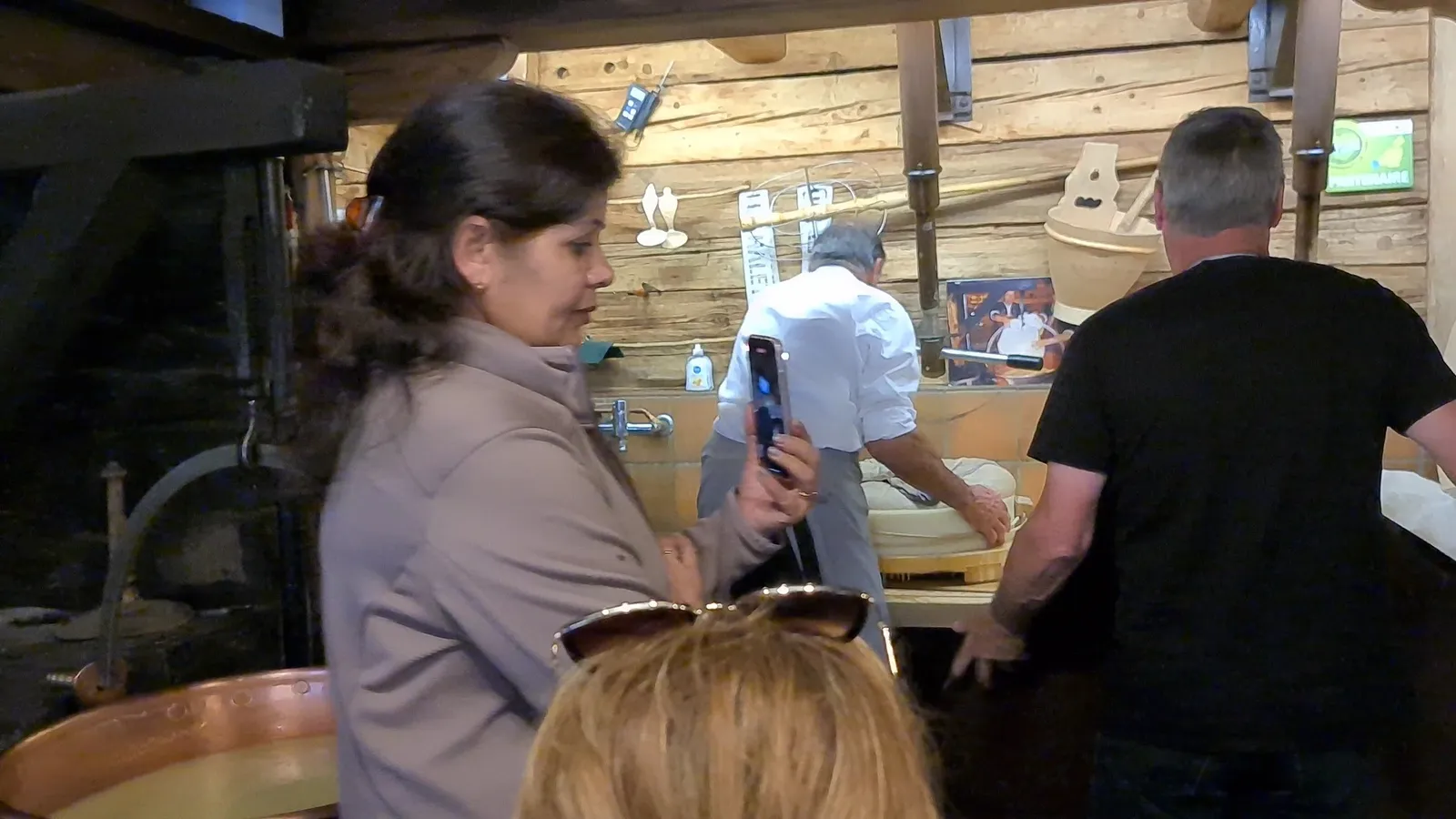
The second is Le Chalet on the main Rougemont road — a restaurant et fromagerie de démonstration where they make the cheese in front of you in the morning and serve it at lunch. You can watch the curd cut, then eat the aged wheels from the same cellar that evening. For anyone interested in how Gruyère AOP is actually produced, this is the single most direct experience in the valley.
For a very French take on a Saanenland menu, locals also send visitors to the Hôtel de Commune de Rougemont (Swiss-French bistro on the village square) and to the Hôtel Restaurant Valrose for a more hotel-dining-room atmosphere with a solid Chasselas list.
Le Cerf is what fondue tasted like before it became a tourist souvenir. Bring cash, take the last train back.
Gstaad village: where to eat fondue on the Promenade
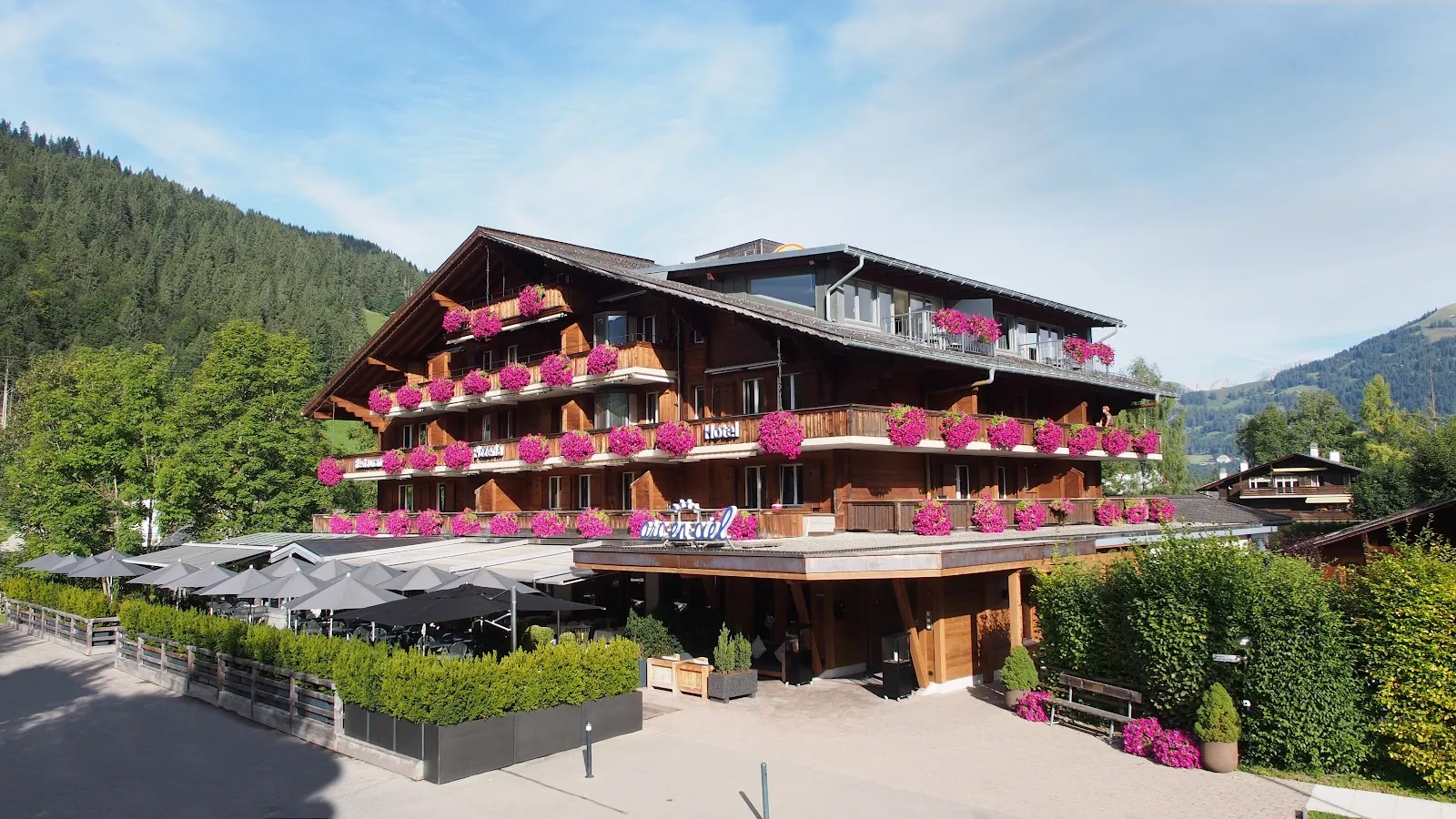
You do not have to leave the pedestrian Promenade to eat a great fondue in Gstaad. Three addresses stand out.
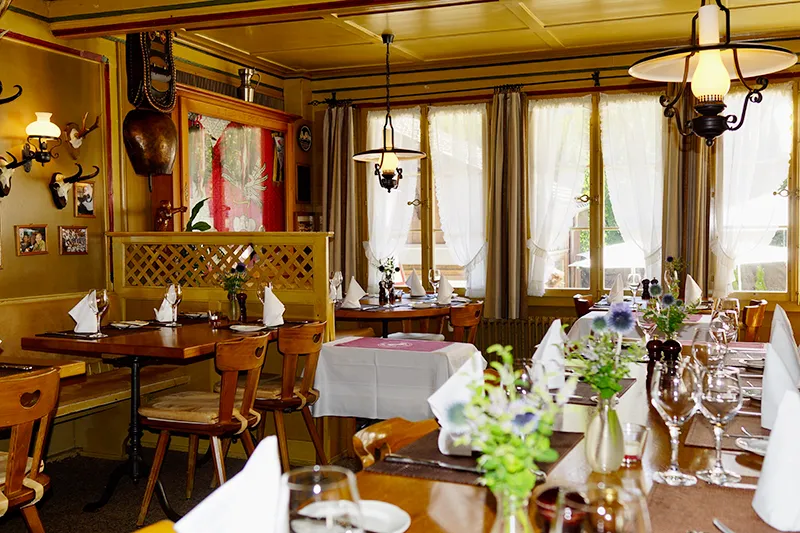
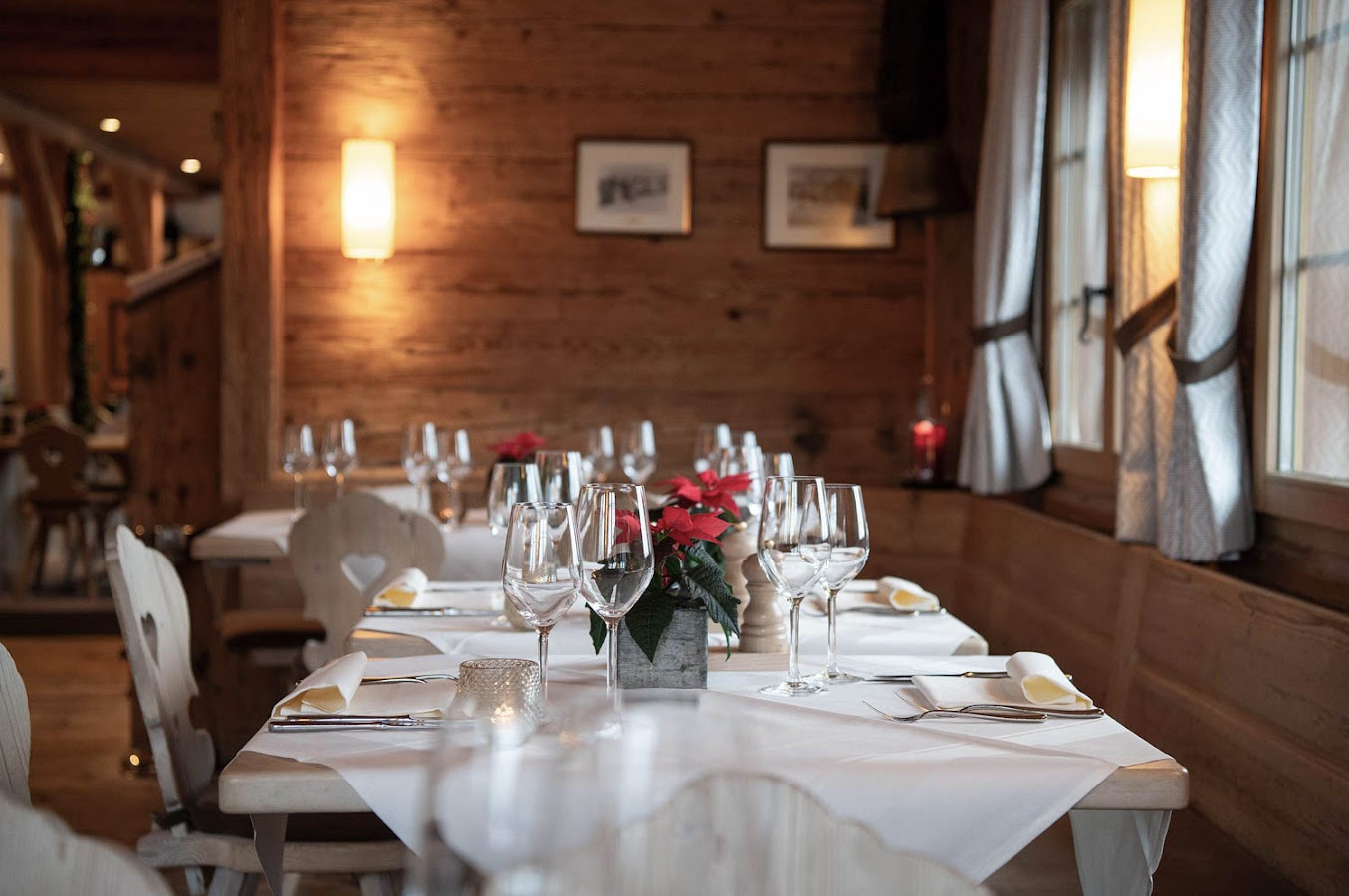
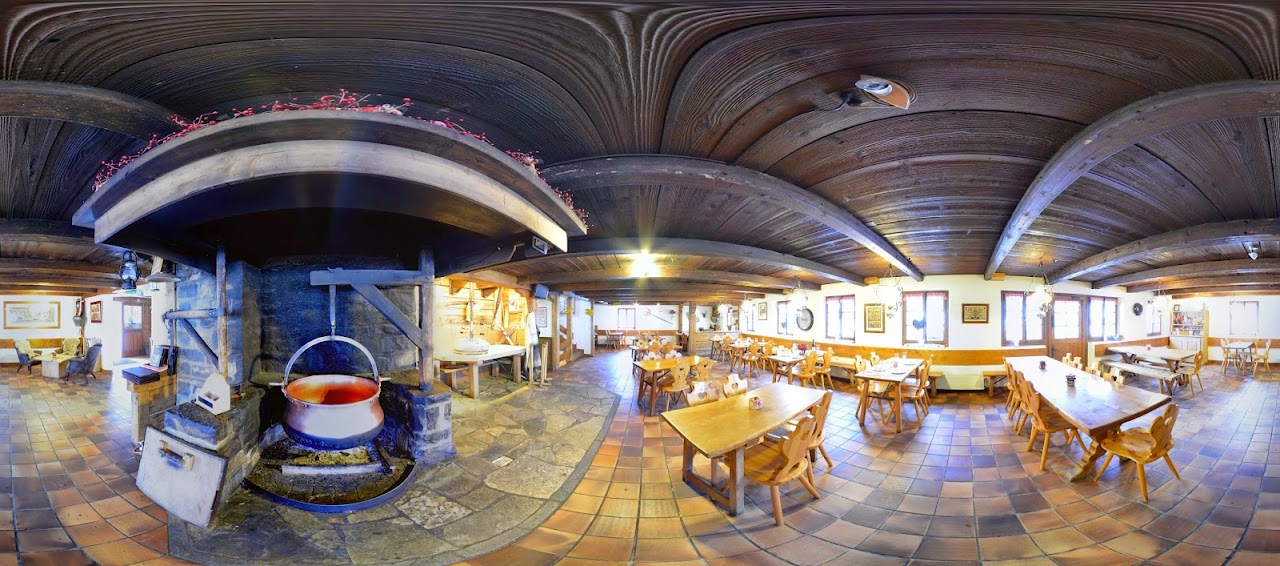
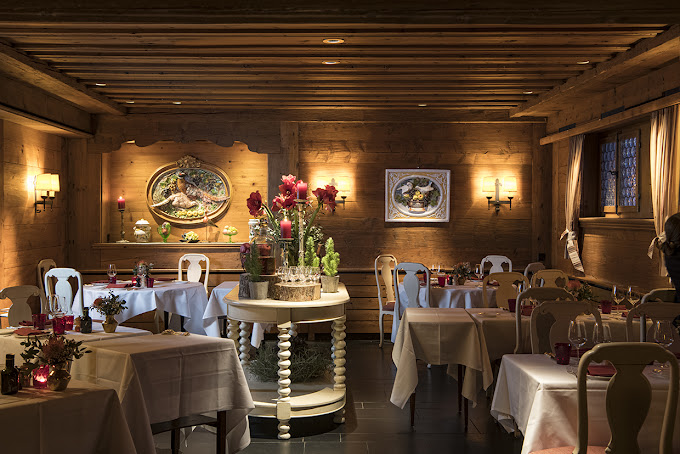
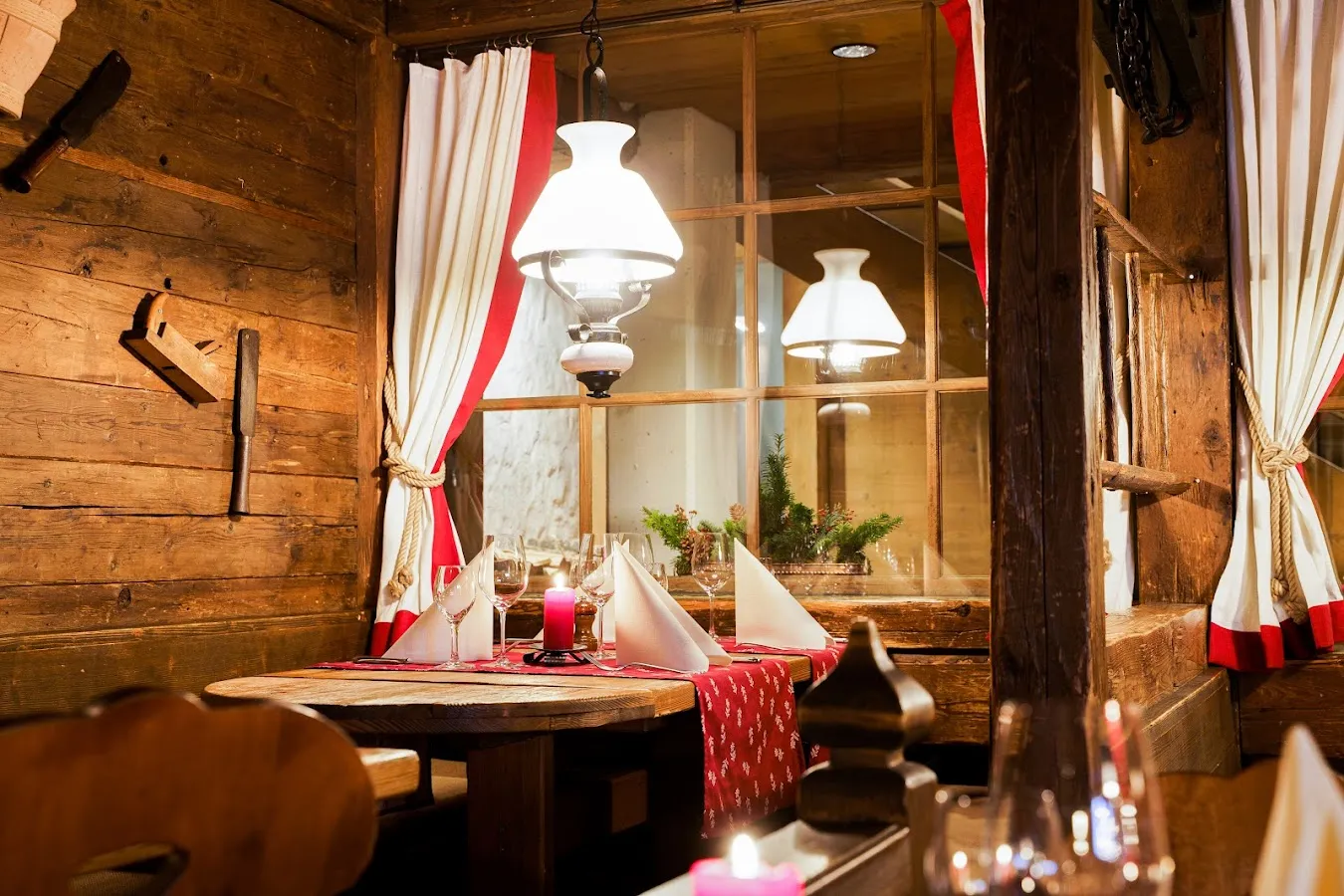
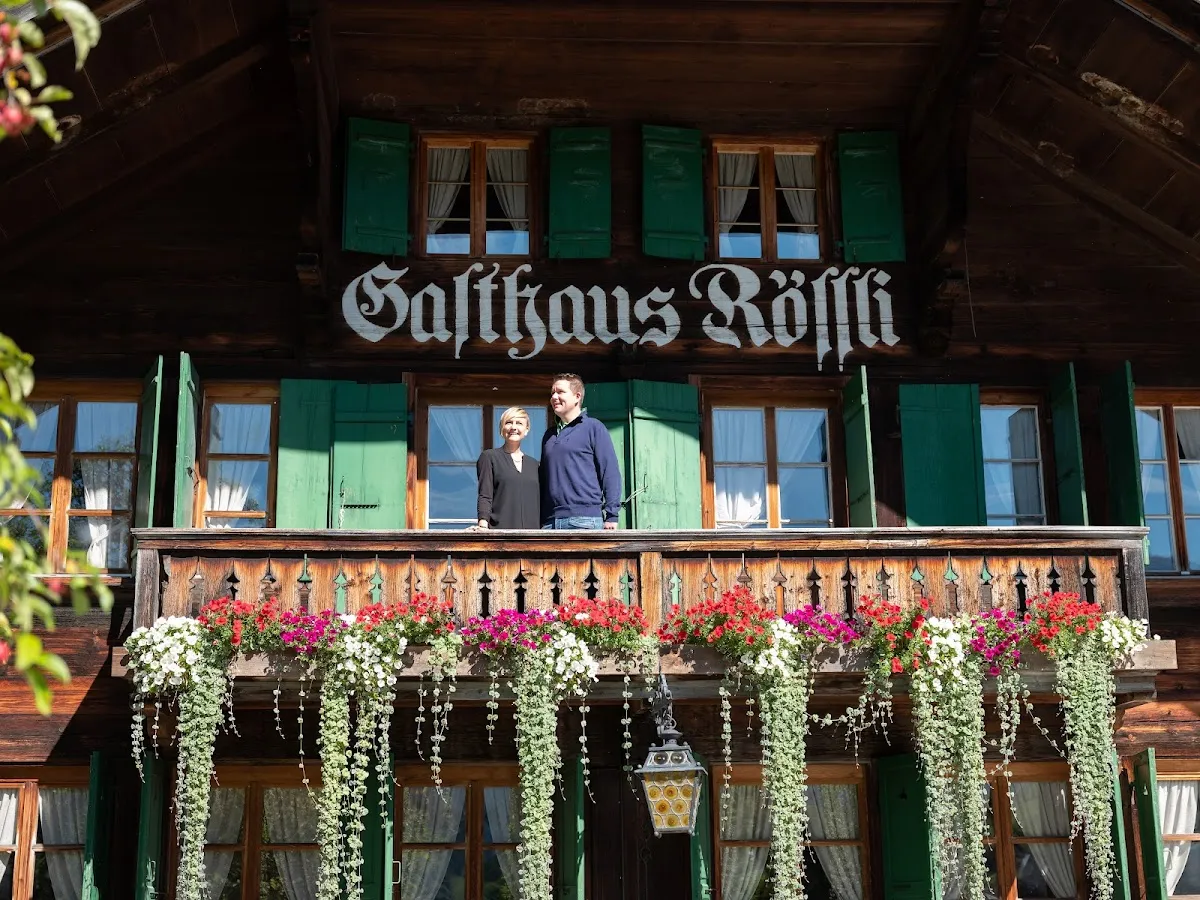
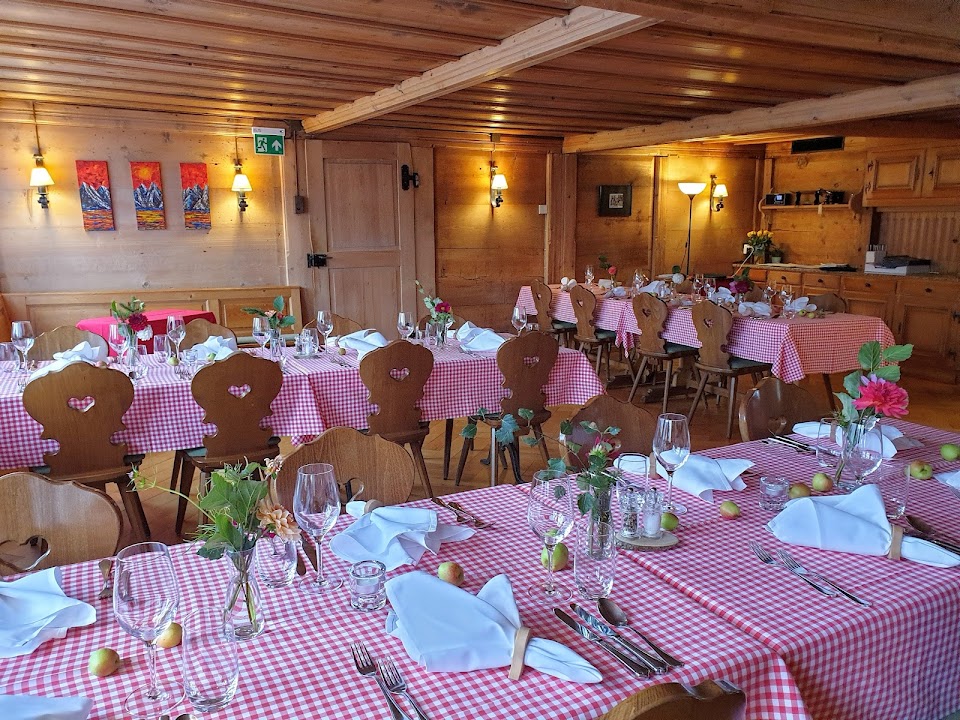
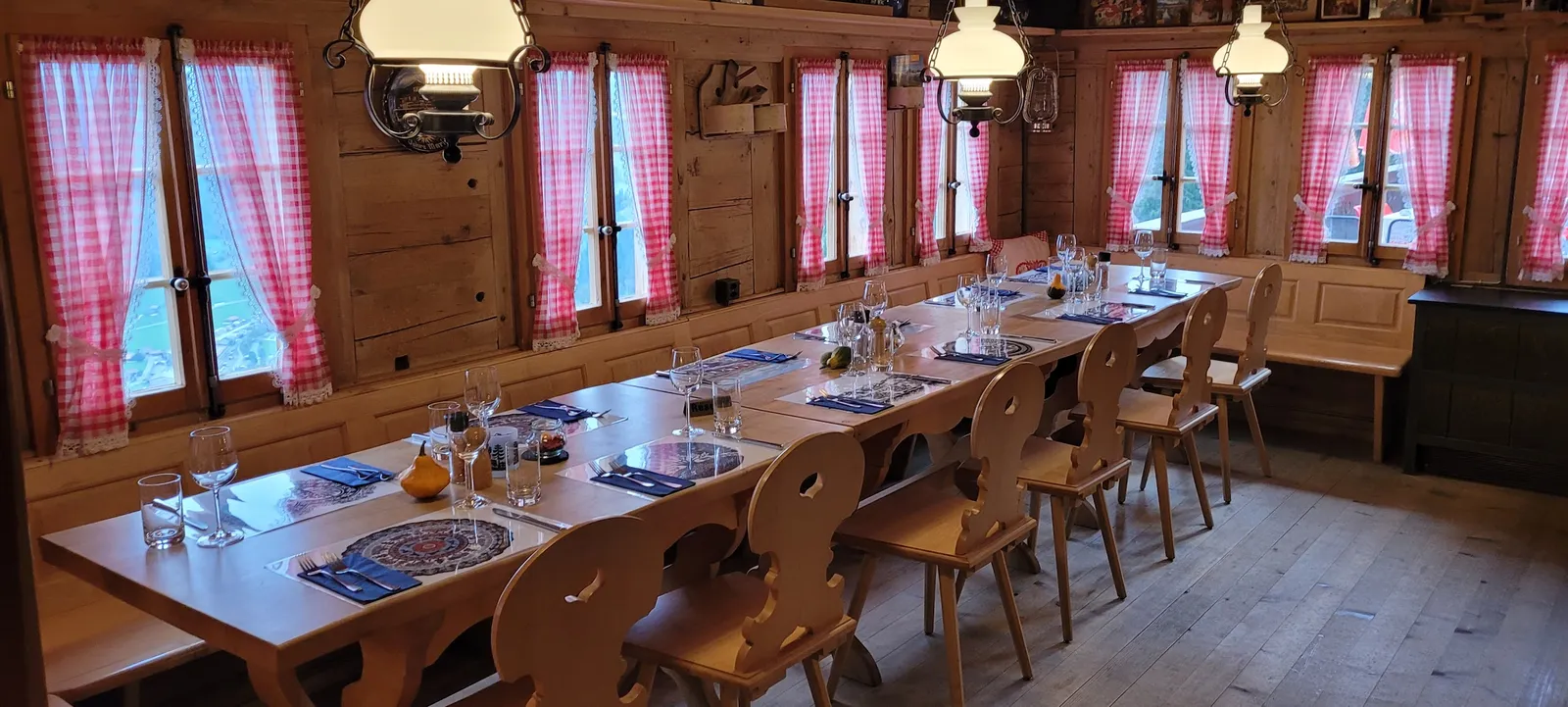
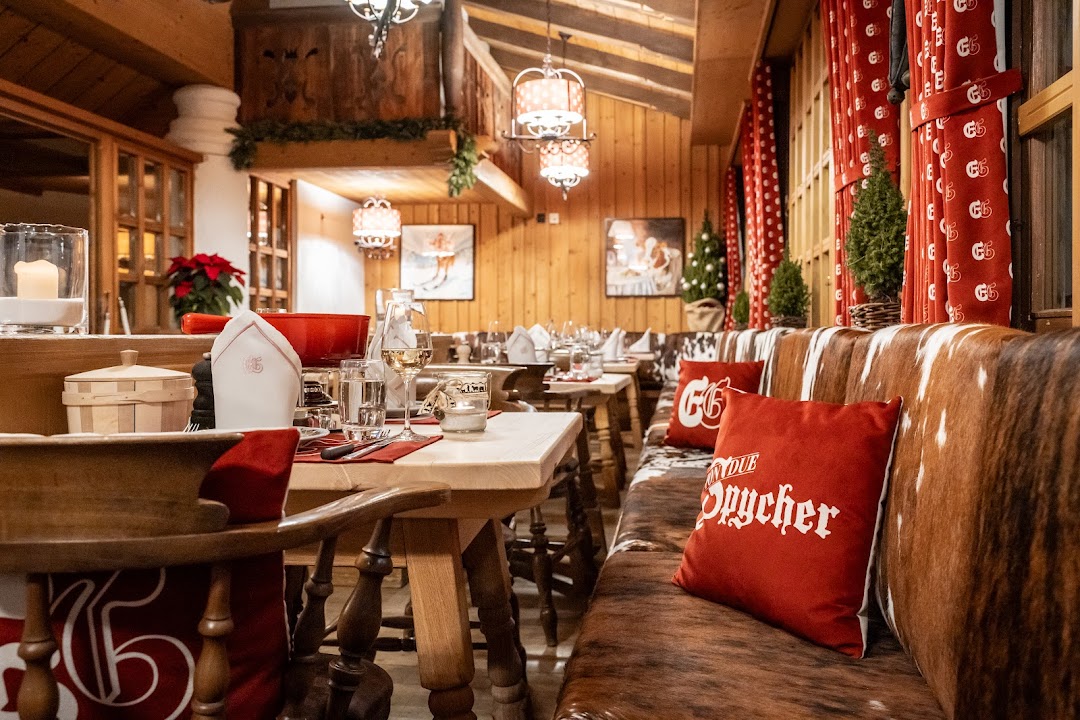
Posthotel Rössli, open since 1845 and four generations in the same family, serves a truffle fondue in winter inside a Stübli whose wood panelling has absorbed 180 years of Alpine cooking smoke. The truffle version uses black winter truffle shaved tableside into a moitié-moitié base — rich enough that one pot feeds three. The Rössli Stübli also does a classic veal with rösti that is a stronger order than anything on their lunch menu.
Pizzeria Arc-en-Ciel sounds wrong on a fondue list but it is the cheap, reliable, local pick in central Gstaad for families and ski groups. Their fondue is standard moitié-moitié, the bread is good, and the bill is half what you pay at the grand hotels.
Restaurant Gildo’s, a hotel restaurant near the station, is the move if you want a fondue after 21:30 when most kitchens have closed — their service window runs later and the Stübli stays warm.
Saanen and the outer villages
The Saanen-side addresses are quieter, cheaper and in most cases better than the Gstaad-Promenade options for fondue specifically.
Restaurant Kernen in Saanen village is a working bistro with a very strong fondue reputation and a Sunday-night crowd that is almost entirely local. It also does a classic Swiss menu — Älplermagronen, cordon bleu — that anchors it as a full-service village restaurant rather than a fondue specialist.
In Feutersoey — a tiny hamlet on the Gsteig road — Restaurant Rössli Feutersoey has been serving a lake trout dish since 1919 that is worth the twelve-minute drive on its own, and their fondue is a straight honest moitié-moitié with cave-aged cheese.
In Gsteig, the Hotel Restaurant Bären is at the foot of the Col du Pillon and is the last dignified fondue stop before you cross into Canton Vaud for the Diablerets. Lauenen has Restaurant Chemistube at the entrance to the Lauenen valley, and from June to October you can push on to Lauenensee Restaurant by the lake for a lunchtime fondue after a walk round the water.
Mentioned
Ask us to book
Hi, I’d like help picking and booking a fondue restaurant in the Saanenland. Dates, group size, and whether you want truffle fondue or a classic village chalet — we handle the call.
Send WhatsAppFondue hikes and cheese-grotto trails
Two of the best fondue experiences in the valley are, technically, walks.
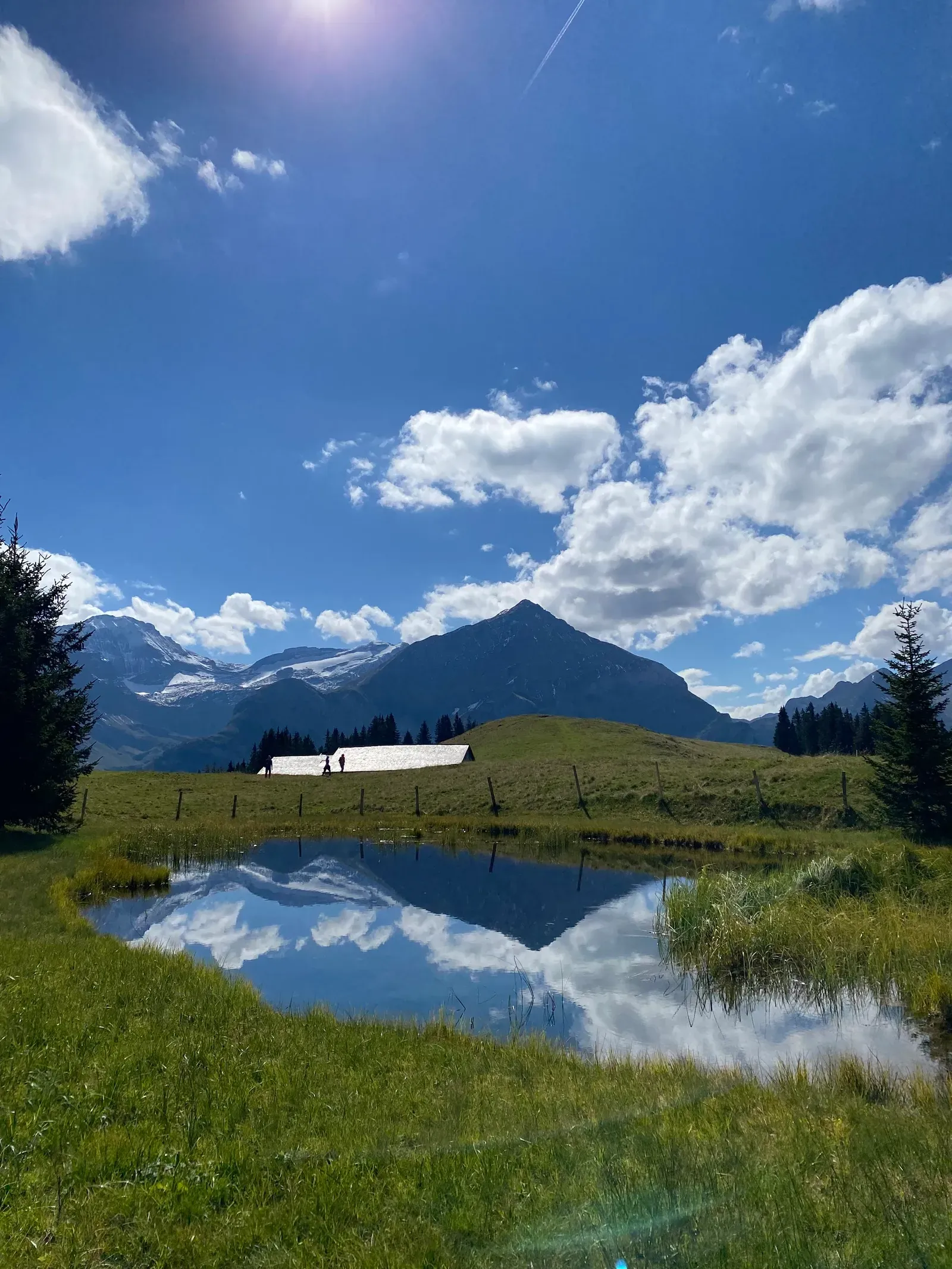
The Fondue Caquelon Schlittmoos above Schönried is a marked trail that leads to a small alpine hut where a family serves a two-cheese fondue with bread, gherkins and Chasselas in a meadow at 1,600 m. In summer and autumn you book the pot in advance; in winter the trail is still walkable from the Horneggli cable car and the hut keeps a reduced menu.
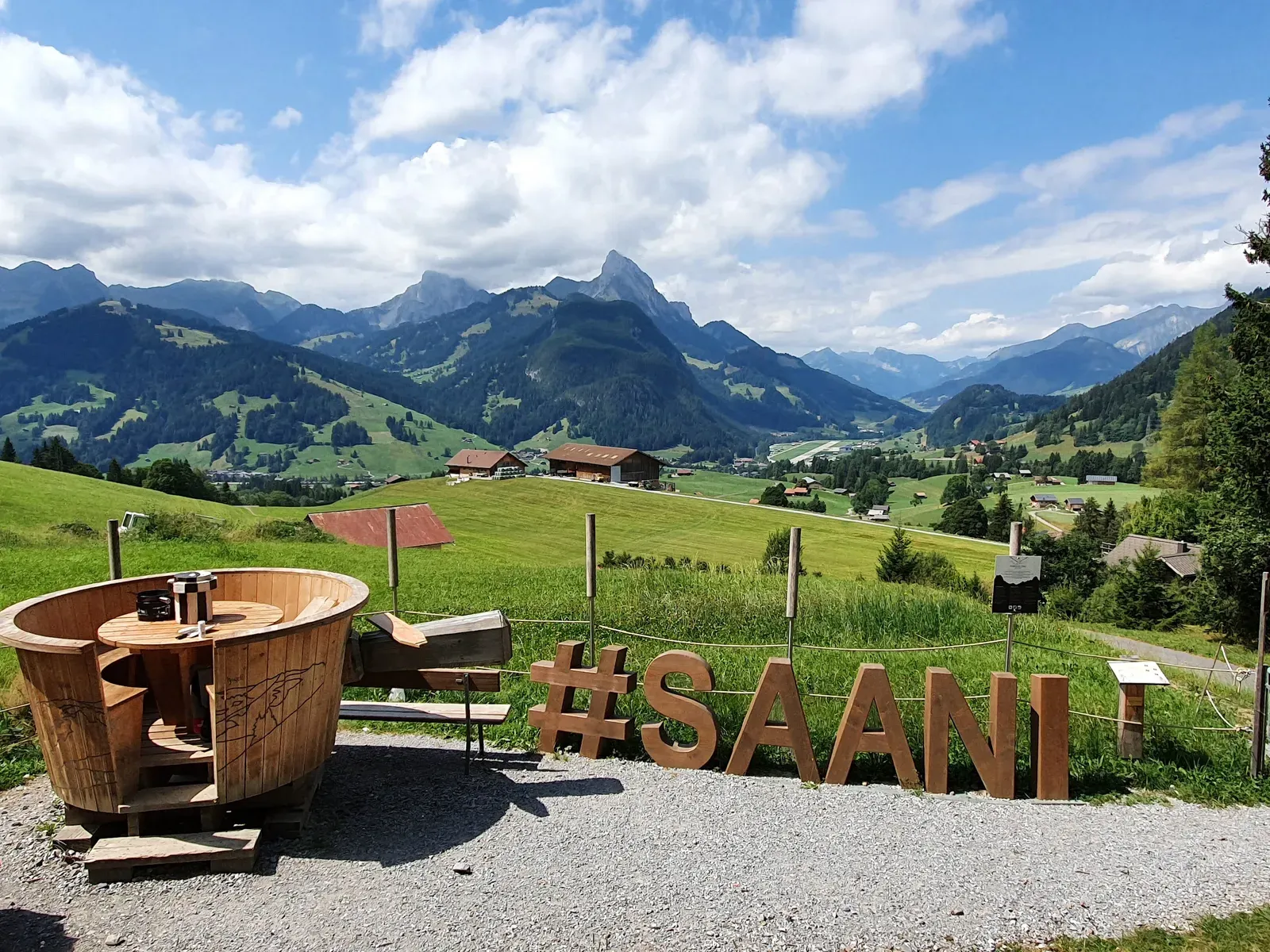
Above Gstaad, the Hiking trail to the Fondue Caquelon Cheese Grotto winds from the Wispile cable car top station through an Alp pasture to a cave where you eat surrounded by ageing wheels of Saanenland cheese. The walk is 45 minutes downhill from Wispile and two hours uphill from Gstaad village — most visitors take the cable car and walk back down.
A third variant, the Wanderweg zum Fondue Caquelon Grossi Vorschess above Saanenmöser, is the easiest of the three — a 20-minute stroll from the Hornberg lift station through larch forest to an unmanned chalet where you light your own burner. All three trails require you to reserve the pot; none accept walk-ins in peak winter weeks.
What to drink with it
Chasselas from Lavaux is the textbook pairing and in the Saanenland it is almost always the correct answer — low alcohol, high minerality, handles the fat of the cheese without competing. On a local wine list look for Dézaley, Calamin, or a village Chasselas from Féchy or Epesses. A well-run Saanenland restaurant will usually stock at least one of these by the glass.
A Petite Arvine from the Valais is the more interesting swap — more aromatic, slightly saline, and the acidity punches through a truffle fondue in a way Chasselas cannot. Ask for a Marie-Thérèse Chappaz or a Domaine Jean-René Germanier if the list is serious.
What you do not drink with fondue is red wine or beer. Local lore says it solidifies the cheese in your stomach; the truth is more that the tannins and carbonation ruin the texture of the pot. A cold Valais Fendant, a Chasselas or a hot Earl Grey are the only three genuinely pleasant options.
Pricing, timing and booking
Expect CHF 32-42 per person for a standard moitié-moitié in a village restaurant, CHF 48-65 for a truffle fondue in a grand hotel, and CHF 55-75 for one of the hike-in experiences (which usually include the hut reservation and the burner but not the cable car).
Booking windows: in peak weeks (Christmas, New Year, February half-term) the Rougemont addresses fill two to three weeks out and Posthotel Rössli’s Stübli requires a same-week call. In shoulder season (late March, late April, most of June) you can almost always walk in after 20:30.
Last trains from Rougemont back to Gstaad run until roughly 23:00 on the MOB line — check the timetable the same day, because MOB reduces frequency in shoulder weeks. Most village restaurants will offer to call you a taxi but a round-trip Gstaad-Rougemont by cab runs CHF 70-90 and sells out on big weekends.
Ready to book?
Hi, could you book me a fondue table in the Gstaad valley? Date: Time: Party size: Village preference (Gstaad / Rougemont / Saanen / mountain hike):
Ask us on WhatsApp