The Saanen tradition
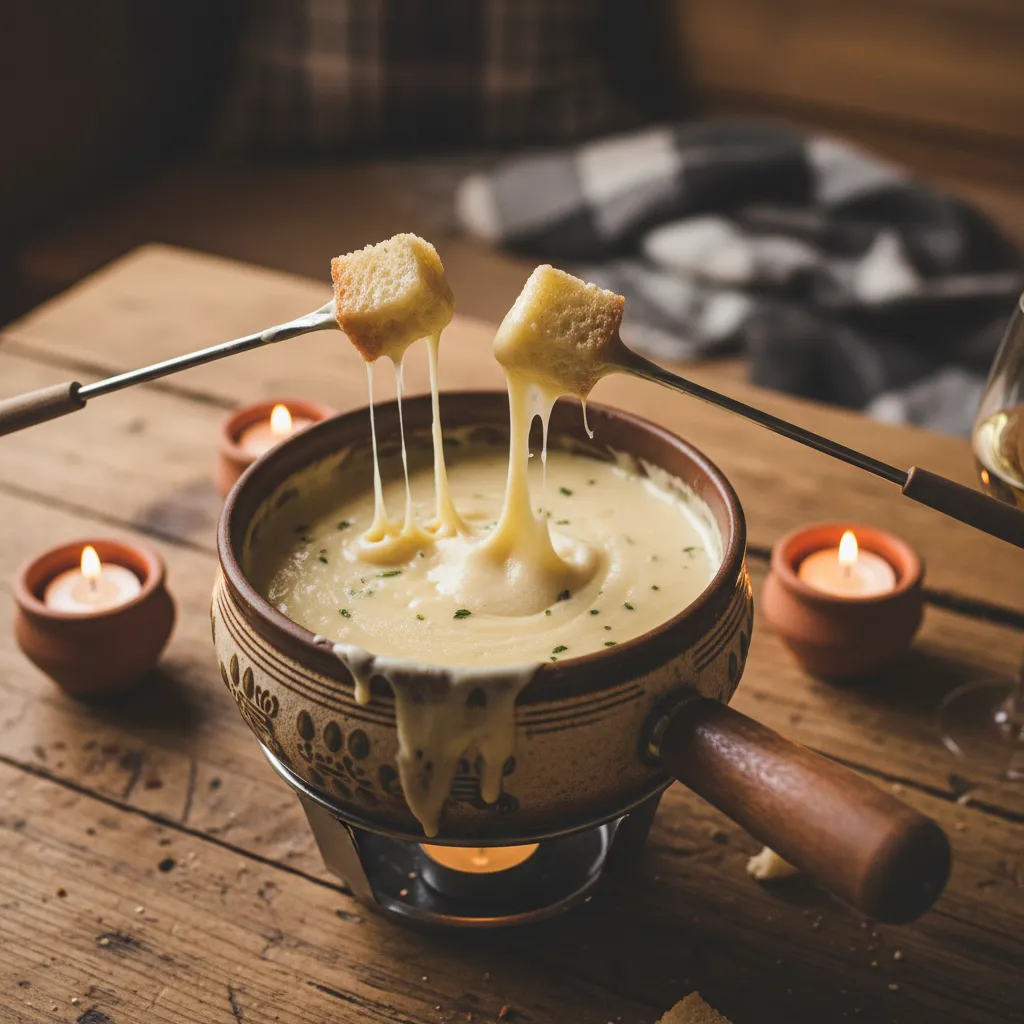
Fondue in Saanen, and why it's worth the detour
Saanen is Gstaad's older, quieter twin. It sits 2 kilometres down the valley at 1,028 metres and predates Gstaad as a settlement by several centuries — the Romanesque Church of St. Maurice dates from the 15th century. Saanen is a working village: it has the train station, the main school, the local fire brigade and the dairy co-op that supplies much of the cheese the valley eats. That means fondue in Saanen is less of a tourist performance than in Gstaad and more of a weekday family dinner. Restaurants that serve fondue here mostly serve it year-round, to residents as well as visitors, and the pricing reflects that.
History & context
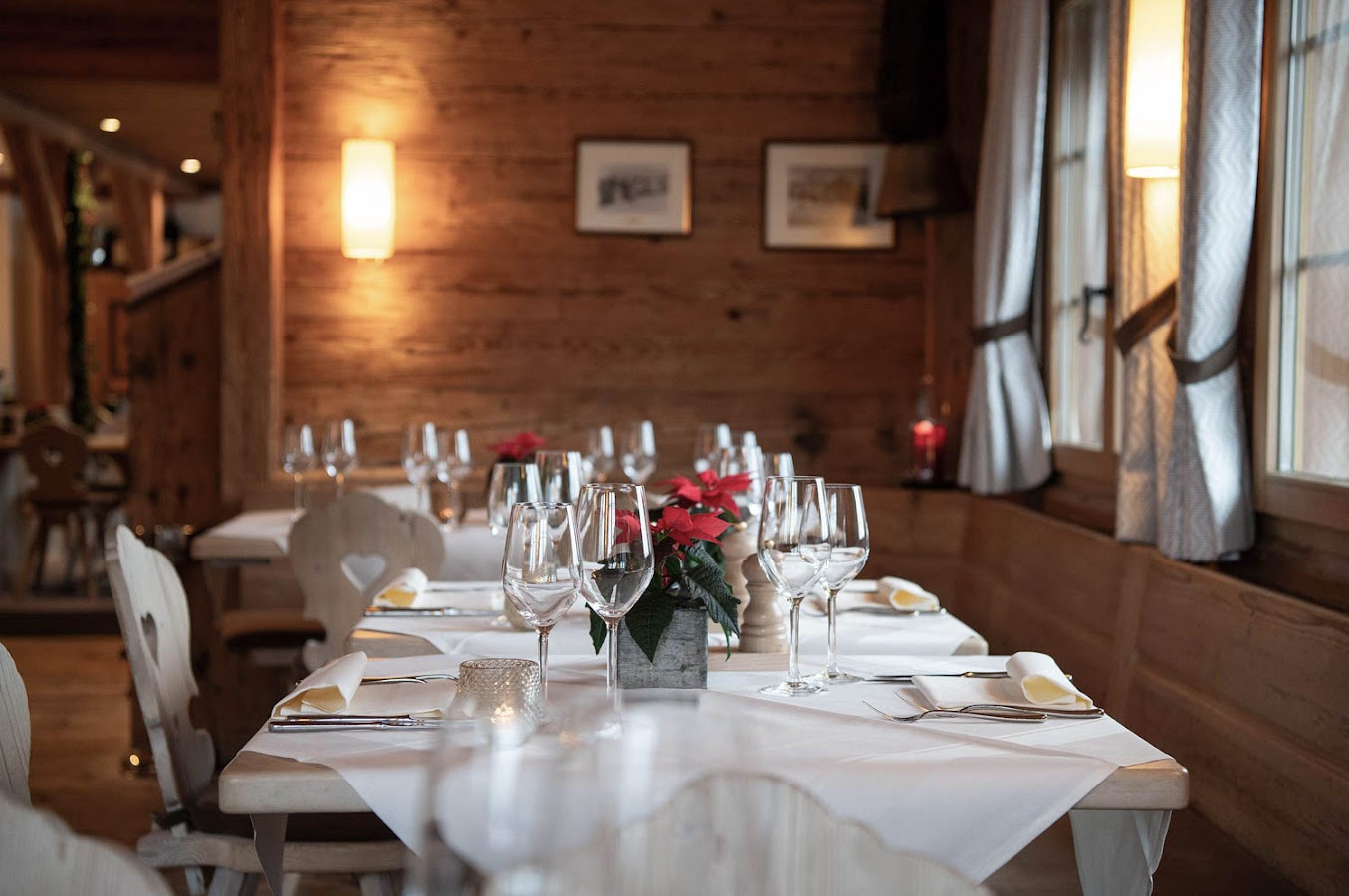
The Saanen dairy has been aging alpine mutschli and Vacherin since the 1920s cooperative structure was established. Before that, individual farms sold directly. Fondue as a restaurant dish in Saanen took hold in the 1950s and 60s, as tourism grew around nearby Gstaad but villagers wanted their own tables. Several of the current restaurants serving fondue in Saanen — Kernen among them — occupy buildings that are more than a century old, with original wooden ceilings and the big central hearth where cheese was once melted for family dinners.
What to order
In Saanen you will find the standard moitié-moitié almost everywhere, plus seasonal variations — fondue chinoise (thin-sliced beef in broth) in late autumn, fondue bourguignonne (cubes in hot oil) for groups. A few restaurants offer a Saanenland-specific fondue made with cheese from a single named Alp, clearly marked on the menu. Sides to ask for: Saanen rösti (a crisper, thinner style than Bernese), viande séchée from the Simmental, and the house bread which is typically sourdough.
Booking & practical
Saanen bookings are generally easier than Gstaad — even on peak winter weekends you can often find a table with one or two days notice. Saanen also has better parking for diners driving up from Lake Geneva or the Berner Oberland. The village itself is beautiful at night, with the church lit and almost no car traffic after 21:00 — many visitors prefer the atmosphere to the busier Promenade in Gstaad.